





Matt Van Wagner shares what’s changed, what disappeared and what PPC still gets wrong
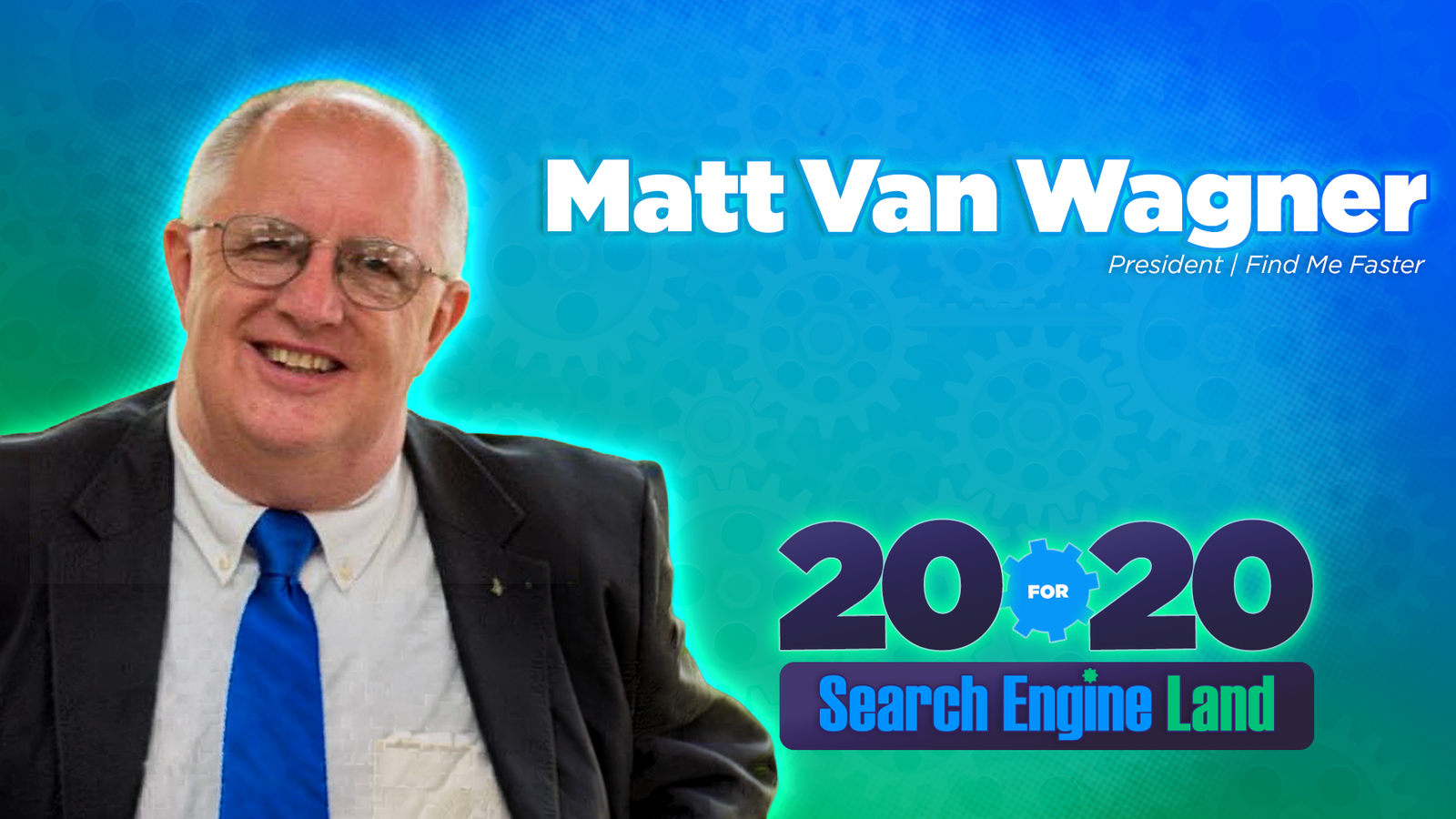

The search marketing industry has gone from an entrepreneurial “gold rush” to an era dominated by automation, AI and increasingly consolidated platforms.
Looking back over that transformation, paid search veteran Matt Van Wagner reflected on the early days of Google Ads, the rise of Search Engine Land, tactics that thankfully disappeared and why advertisers still need to question what Google tells them.
Search marketing started with a gold-rush mentality
Van Wagner entered search in the early 2000s after working in technology sales and marketing, where traditional channels such as trade publications, conferences and direct mail were becoming increasingly ineffective.
His first search conference offered a stark contrast: an industry filled with entrepreneurial energy and people exploring an entirely new way for businesses to reach customers.
That experience ultimately convinced him to leave his existing career and start a search advertising agency — at a time when few businesses even knew what a search advertising agency was.
Selling Google Ads was the easy part
Once advertisers understood what paid search could do, Van Wagner said convincing companies to try Google advertising required little selling.
Demand was plentiful and the emerging agencies were generally collaborative because the market was expanding quickly enough for everyone.
The bigger mistake, he said, was that many early agencies simply didn’t charge enough for the value they were providing.
Search Engine Land helped the industry grow up
By the time Search Engine Land and SMX arrived, search marketing conferences were beginning to suffer from repetitive speakers and presentations.
SMX Advanced took a different approach: rather than repeatedly teaching the fundamentals, it started at an intermediate level and went deeper.
That attracted more sophisticated speakers and discussions, while conversations in bars, over coffee and at dinner became almost as valuable as the formal sessions themselves.
PPC tactics became far less granular
Some of the practices considered sophisticated in early paid search now look unnecessarily complicated.
Single keyword ad groups, duplicated match types and elaborate negative-keyword structures were routinely used to tightly sculpt traffic between campaigns.
Automation has fundamentally changed that approach, making many of those old structures largely obsolete.
Early Google felt more open
One thing Van Wagner misses about the early search industry is the accessibility of Google itself.
Events such as the Google Dance gave marketers opportunities to interact directly with people working on search, while figures such as Matt Cutts became a bridge between Google and the SEO community.
Part of that openness came from the fact that Google itself was still figuring search out. Advertisers, SEOs and search engines were effectively exploring the new ecosystem together.
Google’s definition of success isn’t necessarily yours
Advertisers want profitable sales and measurable business outcomes. Google also wants advertisers to spend money.
Van Wagner argued that marketers need to remember that distinction when evaluating recommendations, default settings and increasingly automated campaign types.
Google may genuinely want its technology to improve advertiser performance, but its commercial incentives and an advertiser’s objectives aren’t automatically identical.
Broad match defaults remain a major frustration
One longstanding example is Google’s use of broad match as a default.
Van Wagner argued that inexperienced advertisers can easily spend money learning lessons Google’s systems already have enough information to help them avoid.
His broader concern is that advertisers increasingly have to spend their own money teaching automated systems things they already know about their businesses.
Automation still needs advertiser knowledge
Van Wagner accepts that automation is moving in one direction and advertisers won’t regain every control they once had.
But that doesn’t mean Google should ignore knowledge advertisers already possess.
If an advertiser already knows particular queries are irrelevant, for example, forcing an AI system to rediscover that through wasted spend makes little sense. Automation should be able to learn while still incorporating the advertiser’s existing expertise.
Ginny Marvin helped bridge Google and advertisers
Van Wagner highlighted Google Ads Liaison Ginny Marvin as a positive influence on the relationship between Google and the advertising community.
Having worked on the advertiser side before joining Google, Marvin understands many of the frustrations marketers experience and, he argued, has been able to advocate for advertisers while still representing Google.
Bidding your way to No. 1 was an expensive mistake
One misconception from early PPC was that advertisers simply needed to outbid everyone to secure the top position.
Van Wagner recalled campaigns where advertisers were willing to pay enormous CPCs purely because they wanted to own the No. 1 spot.
The better philosophy, he argued, was often to compete for second place and focus on economics rather than prestige.
Google Instant showed the power of product publicity
One Search Engine Land article Van Wagner particularly remembers writing examined Google Instant, which began predicting and displaying search results as users typed.
His argument was that Google generated enormous media attention from the product change while Microsoft was spending heavily on conventional advertising to promote Bing.
The episode demonstrated just how powerful Google’s ability to turn product changes into mainstream news had become.
Microsoft realized it couldn’t reinvent search behavior
Microsoft faced a different problem: users weren’t actively deciding which search engine to use every morning.
Van Wagner believes Microsoft therefore made a sensible decision to make its advertising platform familiar to Google advertisers rather than forcing them to learn an entirely different system.
That reduced friction for marketers running campaigns across both platforms, even if it made differentiation more difficult.
Google’s Florida update changed SEO overnight
For Van Wagner, Google’s Florida update was the moment that exposed the risks of relying too heavily on organic search.
The update hit shortly before the holiday season and wiped out rankings for businesses and agencies that had built their strategies around SEO techniques that previously worked.
Some of those techniques were aggressive, but the episode demonstrated how quickly Google could change the rules — and how much revenue could disappear with them.
Paid search became an SEO insurance policy
Florida also helped reinforce the value of paid search.
Organic visibility could disappear following an algorithm update, while PPC gave advertisers another way to maintain traffic and revenue.
For Van Wagner, that uncertainty was one reason he ultimately specialized in paid search rather than continuing to build an SEO business.
Search grew through collaboration, not secrecy
The early search community was unusually willing to share information.
Conference speakers made themselves available after sessions, practitioners exchanged observations when platforms behaved unexpectedly, and competitors frequently helped one another.
Van Wagner attributes much of that generosity to the rapidly expanding market: there was enough opportunity that practitioners didn’t feel they needed to guard every insight from competitors.
Conferences needed to make room for new voices
As search matured, its conference circuit risked becoming dominated by the same established names.
When Van Wagner became involved with speaker selection for SMX Advanced, he tried to make the process more focused on ideas by removing identifying details such as names, genders and companies from submissions during the initial evaluation.
The goal was to judge the strength of an idea before the reputation of the person presenting it — helping new speakers break into an industry that had become increasingly difficult to enter.
Independent search journalism still matters
Asked what would disappear without Search Engine Land, Van Wagner pointed to its independent editorial voice.
For practitioners trying to understand constant platform changes, there remains a difference between advertiser-driven messaging and reporting that can independently question what Google, Microsoft and other platforms are doing.
That editorial independence, he argued, is what has made industry publications valuable over the long term.
PPC professionals need to admit mistakes faster
Van Wagner also acknowledged one uncomfortable PPC habit: finding creative explanations when something goes wrong.
He recalled accidentally applying “loan” as a broad-match negative in an expensive financial campaign and burning through roughly $7,000 in around four hours.
His lesson was that practitioners are often better served by simply acknowledging a mistake, explaining what happened and learning from it rather than looking for something — or someone — else to blame.
Never assume Google is acting in your best interests
One myth Van Wagner wants advertisers to abandon is the assumption that Google is automatically acting in their best interests.
That doesn’t mean Google representatives are dishonest. It means Google is a business with its own incentives, and advertisers need to independently evaluate recommendations rather than treating them as objective instructions.
The industry may have changed dramatically over two decades, but that principle has become more important as advertisers surrender more campaign decisions to algorithms.


إرسال التعليق